Neuro-Linguistic Programming (NLP) is a methodology to map human behaviors as strategies in order to achieve goals. These goals can be very broad, but most of the time they are about emotional well being, excellence in communications and personal influence in general. With NLP you unlearn negative behavioral patterns you acquired in the past and replace them with positive ones. Almost all of the time behavioral change due to NLP is associative learning, also known as Pavlovian learning.
NLP does have three distinct blind spots though. These blindspots are:
- Instrumental learning.
- Innate behavioral patterns.
- Organizations.
Instrumental learning
Besides associative learning where the brain creates a probabilistic relationship between two sense impressions. You see smoke and your brain immediately associates the smoke with fire even if you can’t sense the fire directly. Most of the time NLP fixes negative associations where you see or hear something and then feel bad. But besides associate learning the brain also has instrumental learning.
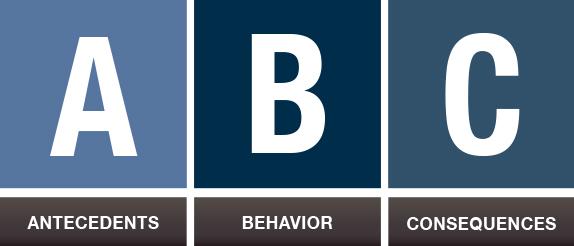
Instrumental learning is how our brain learns new behaviors as instruments to get positive consequences. The easiest way to understand instrumental learning is through the ABC-model of behavioral analysis. The A in the ABC-model stands for Antecedents. Antecedents are everything that happens before people behave. The B stands for Behavior. The C stands for Consequences. Consequences are everything that happens after people behave. As you can see, the ABC-model is a model through time. First you have Antecedents, then Behavior and finally Consequences.
A huge amount of scientific research has shown that Consequences have way more impact on our future behavior than Antecedents. Yet, most people continue to use Antecedents to try to influence others, including the use of NLP. Learning how to think in terms of Consequences rather than Antecedents is going to improve your personal effectiveness by a lot. The best way to learn to think in terms of Consequences is learning Organizational Behavior Management (OBM). OBM is that science of getting the best out of people within organizations. OBM is all about the ABC-model and how to apply the ABC-model in practice. Using the ABC-model has a number of pitfalls, but when you learn OBM you also learn how to navigate around these pitfalls.
Innate behavioral patterns
Central to NLP is that all the behavioral patterns that NLP is changing are learned behaviors. Because these behaviors are learned, you are able to unlearn them if they are negative. NLP overlooks the fact that besides learned behavior we also have innate behaviors. When we are born we are born with both an associative and an instrumental learning machine. If we were not to have these learning machines we could not have learned anything in our lives. Yet, these learning machines do more than only learn new behaviors. In fact they come with so-called evolutionary behavioral patterns that are innate.
Because these behaviors are innate, you cannot unlearn them, not even with NLP. You are stuck with them your whole life. Fortunately, they are dynamic and you can make sure that these innate behaviors are positive rather than negative. First of all, most of your behaviors are learned. Only a fraction of your behaviors are innate. Yet, these innate behaviors are very important to you because they make you you. Due to the fact that you behave your whole life according to these evolutionary behavioral patterns, you associate them with who you are. Also, because these behaviors come from evolutionary times, the context of our lives today are completely different. So these behaviors are about your personal style rather than the content of your life.
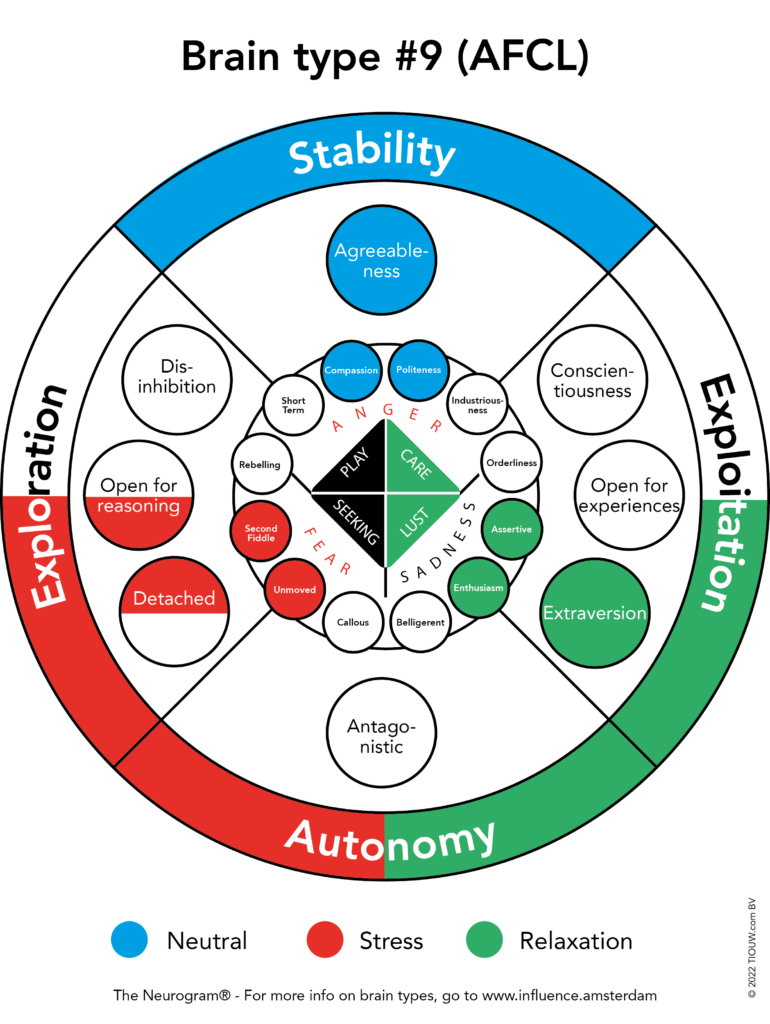
Thanks to the Neurogram® model we have an assessment of these innate behavioral patterns you have and we are able to teach you how to avoid the negative behaviors and promote the positive behaviors.
Organizations
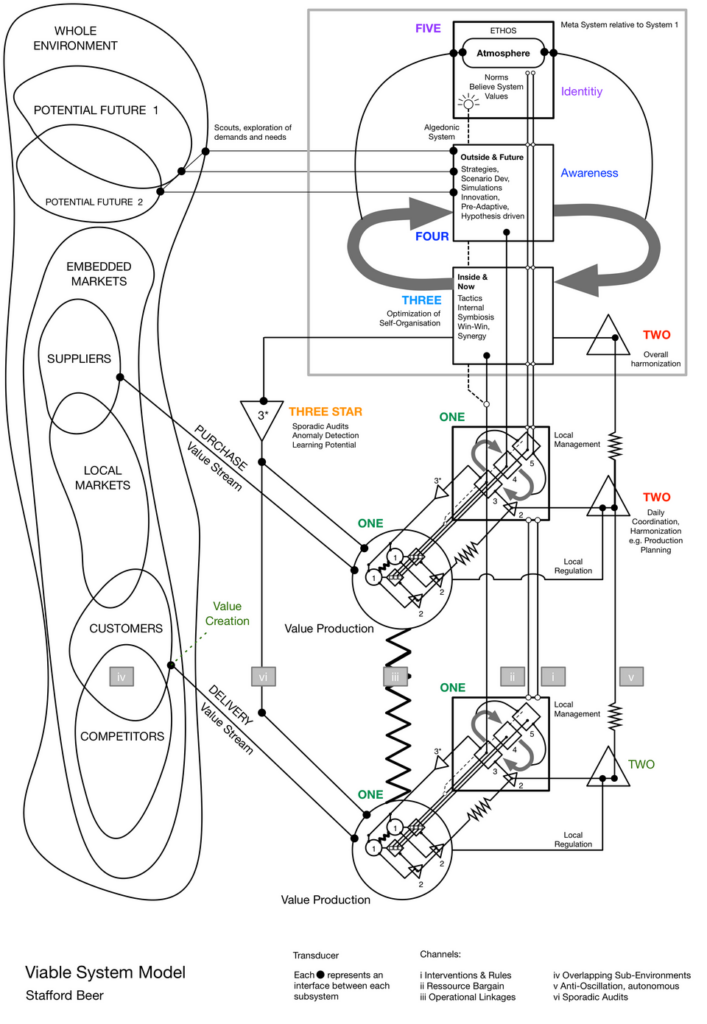
NLP is centered around the individual. Yet, most of the time we work together within organizations. So it really enriches NLP when you are able to better understand the context of the organization. For this we use the Viable System Model (VSM).
The Viable System Model has been developed in the 20th century by Stafford Beer. The VSM is the most scientific way to model, structure and revitalize organizations. The VSM consists of five subsystems that are responsible for:
- Autonomy.
- Coordination.
- Control.
- Exploration.
- Social stability.
In order for an organization to be viable, all five subsystems are required. In practice we turns this around and state that if an organization exists for more than five years, it obviously is viable. Yet, most of the time when you model an organization, you can see that due to organic growth the structure of the organization is suboptimal. This means that some employees get too much on their plate and risk a burnout while other employees don’t get enough on their plate and risk a bore-out.
You can use NLP to help an employee overcome either the stress of a burnout or a bore-out, but if you don’t optimize the structure of the organization, nothing changes and these employees still have either too much to do or too little.
What the Neurogram® and the Viable System Model (VSM) have in common with NLP
Both the Neurogram® model and the Viable System Model (VSM) have one very important thing in common with Neuro-Linguistic Programming (NLP) and that is that all three of these methodologies are cybernetic in nature. The TOTE-model is the cybernetic heart of NLP. TOTE stands for Test Operate Test Exit and was developed by Miller in his seminal book from 1960 “Plans and the Structure of Behavior” where he applied cybernetics to humans.
Every NLP strategy is a chain of TOTE-model units with all the appropriate feedback loops. The same goes for the Neurogram® model and the Viable System Model (VSM). They too have at their heart the TOTE-model, but they apply it to how the brain works and how the organization works respectively.